
Key Stage 4 subjects
Our Key Stage 4 Curriculum has a strong focus on the core academic subjects of English, mathematics and science as well as languages and humanities.
Further details of our GCSE level courses can be found below.
Art
Why Choose Art GCSE?
Course Description
Level: GCSE
Awarding Body: Edexcel
Exam Board Specification
Entry Requirements: To be successful in GCSE Fine Art we recommend that students have achieved at least a band 4 in KS3 Art or are recommended by their art teacher.
At Greenford High School, the Art & Photography Department is strongly committed to offering an innovative approach to making art through projects that involve both traditional and experimental exploration of materials and concepts. The challenge set by the Art course requires the students to develop key artistic skills such as creativity, imagination, problem-solving, critical thinking, cultural awareness, communication and knowledge - all skills that are useful in both employment and continued study at A Level. Art is an excellent option that provides balance with the core subjects.
Course Content
The GCSE Fine Art course is divided into two key components over two years: component 1 and an externally set exam = component 2.
We aim to give students a wide range of experiences and opportunities, and are keen to encourage the development of strong personal qualities in each student's artwork and chosen media. Before embarking on their assessable coursework, students begin the first year by completing a short ‘Intro to Art’ course which develops their handling of a wide variety of art materials, encourages experimentalism, builds technical skill and confidence. These projects serve to equip them with a basic ‘toolbox’ of skills which can be developed and refined in subsequent coursework.
Within GCSE Fine Art (component 1 - 60% of the final grade, component 2 exam 40% of the final grade) students will:
- Explore ideas & concepts behind artists’ work, when specialising in drawing, painting, printmaking and digital photography.
- Visit galleries and exhibitions, enabling students to learn from the work of others and making connections with their own work and past/contemporary practices.
- To show progress through a variety of outcomes and supporting studies. The latest could be in the shape of sketchbooks, notebooks, worksheets, sculpture.
In order to fulfil the demands of the course, students are required to come in after school to complete coursework at least once a week in their second year of the course. Students will be given full support both in and out of set lesson time.
Progression Routes
Achieving a 5+ in GCSE Art means you are equipped to take A Level Fine Art, which is a very comprehensive course that has many pathways for study at University and Art College to lead you in a career as:
- Art Critic
- Art Teacher
- Art Therapist
- Art Director
- Art Historian
- Art Restorer
- Medical artist
- Artist
- Photographer
- Fashion designer
- Architect
- Animator
- Film Set Designer
- Architect
- Drafter
- Footwear designer
- Logo designer
- Publishing
- Illustrator
- Graphic Artist
Curriculum Intent
What is Greenford High School aiming to achieve through its Art curriculum?
- To enable students to develop an understanding and awareness of the world around them by questioning their surroundings, looking deeply and opening their eyes to fresh perspectives
- To develop an awareness of health and safety within an art studio environment and to take responsibility for managing the materials they use
- To develop and apply art skills such as drawing, painting and sculpting and artistic techniques to communicate an idea and analyse the effectiveness of own art work
- To be creative and develop their ability to problem solve, think academically, emotionally, physically and spiritually. They will learn to adopt resilience and focus in applying their technical skills to projects that develop their self-expression
- To respond imaginatively to artist and thematic research and use knowledge of key artists and cultures to inspire their art work. Students develop an understanding of the historical and cultural development of art forms and are taught to evaluate and analyse artworks using subject-specific vocabulary
- To plan and develop meaningful responses for their art work that realises intentions and demonstrates an understanding of visual language
- To display creative expression which leads to improved well-being, and support their study experience. The study of other cultures through Art has strong links with Religious Education, History, English, and Media.
Student Experience
Business Studies
Why Choose Business Studies GCSE?
Course content
Level: GCSE
Awarding Body: Edexcel
Exam Board Specification
Entry Requirements: To be successful in GCSE Business, students need to demonstrate a good standard of Maths and English. As a guide, students should be progressing through level 5 in Maths and English to be considered.
In order to ensure that students study a balanced curriculum, students cannot study both GCSE Economics and GCSE Business.
Students studying GCSE Business Studies cover the following topics:
- How to set up a small business
- Finance
- Marketing
- Human Resources
- Investment Appraisal
- The Economy
- Enterprise skills
Course assessment
GCSE Business Studies is a two-year course. There are two exams, both taken at the end of the second year:
Theme 1: Investigating Small Business
Worth 50% of final GCSE mark
Theme 2: Building a Business
Worth 50% of final GCSE mark
Both papers consist of calculations, multiple-choice, short-answer and extended-writing questions
Progression Routes
Students can progress to study a range of A Level subjects including, Business, Economics, Politics, Sociology and Law. Many Business students from Greenford continue to study the subject at university and have gone on to develop successful business careers. Business Studies is especially favoured by employers in areas of Finance, Business and Accounting.
Curriculum Intent
What is Greenford High School aiming to achieve through its Business and Economics curriculum?
- To develop students’ awareness and natural curiosity of the Business and Economic environment around them and to raise awareness of economic and business developments in the UK and around the world.
- To offer opportunities for students to engage in activities that allow them to develop their self-confidence, employability and enterprise skills.
- To promote moral, social and cultural responsibility through the real world nature of the subject via topics such as business ethics, social costs and globalisation.
- To encourage students to become effective and independent learners, as well as being critical and reflective thinkers with enquiring minds.
- To enable students’ to build upon their business and economics knowledge and skills and apply them appropriately to produce successful outcomes.
- To offer a broad curriculum within the department to make the subject offering comprehensive and accessible.
- To prepare students for the next stage of their education, future pathways and careers through developing their skills and attributes and providing opportunities and experiences to inspire them to succeed.
Student Experience
Cambridge National Creative iMedia
Course Description
Level: Level 1/2 (GCSE Equivalent)
Awarding Body: OCR
Exam Board Specification
The media industry is one of the fastest-growing sectors in the UK. From the games we play to the digital graphics we see on social media, digital media is everywhere. Creative iMedia at Greenford High School equips students with the wide range of skills needed to succeed in the digital age.
This course is highly practical. It isn’t just about "using" media; it’s about becoming a content creator. Students will learn how to take a client brief and turn it into a professional-standard product, developing the discipline, technical proficiency, and creative flair that modern employers demand.
Course Content
Creative iMedia covers the following core areas:
- Media Industry Context: Understanding sectors, job roles, and how legal issues like copyright and defamation impact production.
- Pre-production Skills: Mastering the "planning" phase, including mood boards, storyboards, client briefs, and visualization sketches.
- Digital Graphics: Learning how to manipulate images and create assets for specific audiences and purposes.
- Interactive Digital Media: Depending on the chosen units, students may explore web design, digital animation, or game concept development.
- Technical Software: Developing high-level skills in industry-standard software like Adobe Photoshop and Illustrator.
- The Production Cycle: Taking a project from the initial idea through to final review and evaluation.
Assessment
The Cambridge National in Creative iMedia is assessed through a combination of one external exam and two practical NEA (Non-Exam Assessment) units:
- R093: Creative iMedia in the Media Industry (Exam)
- 40% of the final grade.
-
- A 1 hour 30 minute written paper taken at the end of the course.
-
- Tests knowledge of the media industry, factors influencing product design, and pre-production planning.
- R094: Visual Identity and Digital Graphics (NEA/Coursework)
- 25% of the final grade.
-
- An OCR-set assignment where students create a brand identity and digital graphic for a specific client.
-
- Completed under controlled conditions in school.
- Optional Unit: e.g., R098 Visual Imaging (NEA/Coursework)
- 35% of the final grade.
-
- Students complete a second practical project, such as creating an interactive website or an animation.
-
- Assesses the ability to plan, create, and review a complex digital product.
Resources
All Creative iMedia work is managed digitally. Students will use our dedicated online platforms (Google Docs, Google Classroom, Canva Pro) to document their creative process.
- Student Portfolios: Digital folders where all NEA evidence is securely stored and organized.
- Technical Guides: Access to a library of "How-To" videos for Canva Pro
- Textbooks: We recommend the OCR Cambridge National Creative iMedia CGP Guide
Progression Routes
A Cambridge National in Creative iMedia is the perfect stepping stone to Level 3 Cambridge Technicals in IT or Digital Media, A-Level Media Studies, or specialised apprenticeships in graphic design, web development, and film production.
Curriculum Intent
What is Greenford High School trying to achieve through our Creative iMedia curriculum?
- Vocational Excellence: Providing students with a "hands-on" experience that mirrors the workflows of a real-world design agency.
- Visual Literacy: Enabling students to interpret client requirements and translate them into effective visual communication.
- Software Mastery: Ensuring students are proficient in professional tools, moving beyond basic office software to specialized creative suites.
- Pre-production Rigor: Teaching students that great media products start with great planning (mood boards, mind maps, and scripts).
- Legal & Ethical Awareness: Developing a deep understanding of intellectual property, assets, and the ethical considerations of digital manipulation.
- Analytical Review: Encouraging students to critically evaluate their own work against a client brief to drive constant improvement.
- Independence: Cultivating the ability to work through a project from start to finish with minimal intervention, fostering a "can-do" professional attitude.
Cambridge National Level 2 IT
Course description
Explore the dynamic world of Information Technology (IT) and unlock your potential to innovate and solve real-world problems. This course offers you the opportunity to dive into the digital universe, understand the fundamentals of IT, and develop skills that are crucial in today's technology-driven society.
Course Content
You will engage with exciting topics such as IT in the digital world, data manipulation using spreadsheets, and the cutting-edge field of Augmented Reality (AR).
You will learn to design, create, test, and evaluate IT solutions that can transform the way we live, work, and play.
Assessment
Your progress will be assessed through a combination of exams and practical projects. The course includes both externally assessed exams and internally assessed projects, offering you a comprehensive evaluation of your knowledge and skills.
Content assessed are as follows:
-
- R050: IT in the Digital World (Exam-based)
- R060: Data Manipulation using Spreadsheets (Coursework-based)
- R070: Using Augmented Reality to Present Information (Coursework-based)
Progression Routes
This course opens pathways to further study and careers in IT and related fields. It lays a strong foundation for Level 2 and Level 3 qualifications, including A Levels, T-Levels, and apprenticeships in Information Technology, Digital Media, and beyond.
Curriculum intent
- To build a computing curriculum that develops pupil’s learning and results in the acquisition of knowledge of the digital world around them, that prepares pupils to live safely in an increasingly digital British society.
- Develop learner’s knowledge, skills and understanding through key computational concepts and experience. So that they will become confident and robust problem solvers and understand how to better use computers as a tool, a tool that can be configured and reconfigured to solve any number of problems that face us now and that will face us further into the future.
- The KS3 curriculum has been designed to ensure learners have sufficient knowledge to stay safe online and use computers safely in life.
- The KS3 curriculum also provides a focus on developing resilient learners who think in a more logical way, can recover from mistakes and effectively solve problems.
- The rationale of the KS4 curriculum is for students to develop the mind-set of a computer scientist built upon the foundations at KS3 and to build upon at KS5.
- Learners to have the opportunity to develop their capability, creativity and knowledge in computer science, digital media, and information technology.
- Computer Science will develop skills in programming, problem solving and analytical thinking. This qualification provides students with a range of transferable skills.
- Students will develop their knowledge and understanding of computer technology to become independent and discerning Computer Scientists, who are able to make informed decisions about its use while being aware of the implications of different technologies.
- We want students to not only understand how to use technology effectively and responsibly but also how technology is developed and constantly redeveloped into new and exciting tools.
CHILDCARE
Why Choose Childcare GCSE?
Course description
Level: Level 2 (GCSE Equivalent)
Title: Technical Award in Child Development and Care in the Early Years
Awarding Body: NCFE (CACHE)
Exam Board Specification
In Child Development we explore how children learn, grow and develop physically, cognitively, emotionally and socially between 0 - 5 years of age. The course also provides students with an understanding of the childcare sector, including the roles and responsibilities of early years practitioners.
The course is designed for students who want an introduction to child development and care that includes a vocational and project-based element. The qualification will appeal to those who wish to pursue a career in the early years sector or progress onto further study in social sciences.
Students will be able to apply their knowledge and work through a range of case studies that will challenge them to problem solve and relate their understanding of the early years practitioner role and child development.
The qualification is graded at pass, merit and distinction (equivalent to GCSE grades 8.5 to 4) and is designed to match the rigour and challenge of GCSE study.
This qualification has been designed to sit alongside the requirements of core GCSE subjects and is appropriate for learners who are motivated and challenged by learning through practical opportunities and experiences.
COURSE CONTENT
The qualification consists of nine content areas:
- Child Development
- Factors that Influence Development
- Care Routines, Play and Activities
- Early Years Provision
- Legislation, Policies and Procedures
- Expectations of the Early Years Practitioner
- Roles and Responsibilities within Early Years Settings
- Observations
- Planning in Early Years Childcare
COURSE ASSESSMENT
- 1 non-examined assessment (project / coursework) (50%)
- 1 exam (50%)
Both assessments are completed in Year 11 (second year).
PROGRESSION ROUTES
Immediate progression:
- Level 3 programmes, including Health and Social Care.
- Level 3 apprenticeships in education, childcare, healthcare or the early years.
- Students may progress to A-Levels as this course is considered a GCSE equivalent towards most Post-16 entry requirements.
Longer term careers which stem from a background in Child Development include:
- Nursery nurse
- Nursery manager
- Teaching assistant
- Primary school teacher
- Child nurse
- Social worker
- Educational psychologist
- Play therapist
- Family support worker
Curriculum intent
What is Greenford High School aiming to achieve through its Childcare curriculum?
- To develop students’ understanding of child development and wellbeing and provide an introduction to working in the childcare sector.
- To offer opportunities for students to engage in activities that allow them to develop their self-confidence, creativity, and employability skills.
- To promote effective demonstration of essential vocational skills, processes, working practices and documentation relevant to the childcare and early years sector.
- To encourage students to become effective and independent learners.
- To enable students to build upon their knowledge and skills and apply them appropriately to produce successful outcomes.
- To prepare students for the next stage of their education, future pathways, and careers through developing their skills and attributes and providing opportunities and experiences to inspire them to succeed.
Student Experience
Computer SCIENCE
Why Choose Computer Science GCSE?
Course Description
Level: GCSE
Awarding Body: AQA
Exam Board Specification
Entry Requirements:
Entry Requirements: Students are required to have achieved a minimum grade of 3+ in Computer Studies and English, and to be in set 1 for Maths.
GCSE Computer Science is a dynamic and future-focused subject that develops students into confident problem solvers, logical thinkers and capable programmers. Through a balance of hands-on programming and essential computing theory, students gain a deep understanding of how digital systems work and how technology shapes the modern world.
Across the course, students learn how to design algorithms, write and refine programs, and understand the principles behind data, networks, cyber security and computer systems. They also explore the ethical, legal and environmental impacts of technology, helping them to become informed and responsible digital citizens.
The course is linear, meaning students sit all their exams at the end of Year 11, allowing learning to build progressively over two years.
Assessment overview
The GCSE is assessed through two equally weighted written examinations:
- Paper 1: Computational Thinking and Programming Skills
A 2-hour exam focusing on problem solving, algorithms and programming. Students will analyse code, design solutions and write or refine programs. - Paper 2: Computing Concepts
A 1 hour 45 minute exam covering data representation, computer systems, networks, cyber security, databases (including SQL) and the impact of digital technology on society.
Together, these assessments reward students who can think logically, apply knowledge creatively and solve real-world problems using computational thinking.
Why choose GCSE Computer Science?
Learn to code
Develop practical programming skills that are highly valued in education and the workplace.
Build powerful problem-solving skills
Learn how to break down complex problems and design clear, logical solutions.
Understand how technology really works
Go beyond using technology to understanding what happens behind the scenes.
Prepare for the future
Computer Science supports progression into a wide range of STEM subjects and careers.
A subject for thinkers and creators
Ideal for students who enjoy maths, logic, creativity and tackling challenges.
Progression Routes
GCSE Computer Science provides excellent preparation for:
- A Level Computer Science
- A Level Mathematics and Further Mathematics
- A Level Physics, Engineering or IT
- T Levels and apprenticeships in digital, computing and engineering fields
- Careers in software development, cyber security, data science, game development, engineering and AI
The skills developed — logical thinking, resilience, accuracy and creativity — are also highly transferable and valued across many other subjects and career pathways.
Curriculum Intent
What is Greenford High School aiming to achieve through its Computing and Information Technology curriculum?
- To build a computing curriculum that develops pupil’s learning and results in the acquisition of knowledge of the digital world around them, that prepares pupils to live safely in an increasingly digital British society.
- Develop learner’s knowledge, skills and understanding through key computational concepts and experience. So that they will become confident and robust problem solvers and understand how to better use computers as a tool, a tool that can be configured and reconfigured to solve any number of problems that face us now and that will face us further into the future.
- The KS3 curriculum has been designed to ensure learners have sufficient knowledge to stay safe online and use computers safely in life.
- The KS3 curriculum also provides a focus on developing resilient learners who think in a more logical way, are able to recover from mistakes and effectively solve problems.
- The rationale of the KS4 curriculum is for students to develop the mind-set of a computer scientist built upon the foundations at KS3 and to build upon at KS5
- Learners to have the opportunity to develop their capability, creativity and knowledge in computer science, digital media and information technology.
- Computer Science will develop skills in programming, problem solving and analytical thinking. This qualification provides students with a range of transferable skills
- Students will develop their knowledge and understanding of computer technology to become independent and discerning Computer Scientists, who are able to make informed decisions about its use while being aware of the implications of different technologies.
- We want students to not only understand how to use technology effectively and responsibly but also how technology is developed and constantly redeveloped into new and exciting tools.
Student Experience
Design and Technology
Why Choose Design and Technology GCSE?
' style="width: 200px; height: 150px;">
You have not allowed cookies and this content may contain cookies.
If you would like to view this content please
Course Description
Level: GCSE
Awarding Body: AQA
Exam Board Specification
GCSE Design and Technology is a creative and practical subject that helps students develop their problem-solving skills, technical knowledge, and confidence in designing and making. Students learn how products are made, explore different materials and processes, and develop ideas through sketching, modelling, and prototyping. Whether they’re building with timber, programming systems, or exploring sustainable design, students are encouraged to think independently and critically – just like real designers and engineers.
Course Content
Year 10 is a foundation year where students build their core knowledge and practical skills through three focused projects – one each in timbers, polymers and metals. For each project, students complete a theory portfolio alongside a practical outcome, helping them explore materials, tools and manufacturing processes in depth.
In Year 11, students complete their Non-Exam Assessment (NEA) – a design and make project based on a real-life context released by the exam board. They take it from research and design ideas through to modelling, development and final manufacture.
Throughout the course, students also learn about:
- Core Technical Principles – materials, processes, sustainability, and how products are designed and made in industry.
- Specialist Technical Principles – we focus on working with timbers in more detail.
- Designing and Making Principles – how to research, generate ideas, test prototypes and evaluate their work effectively.
It’s a great course for students who enjoy being hands-on, thinking creatively and bringing ideas to life through design.
Progression Routes
Students can progress to study A Level Product Design which includes Resistant Materials, Graphics, Systems and Control and Textiles.
Curriculum Intent
What is Greenford High School aiming to achieve through its Design & Technology curriculum?
- To build up creativity, problem solving, planning, practical and evaluation skills to become independent and resourceful.
- To develop Health and Safety awareness in their working environment and surroundings to keep students safe.
- To develop the students understanding of the huge, life-changing role and impact a designer can have through the use of real world problems and value what is ‘good design’ and how it will impact their future lives.
- To foster a culture of ‘design critique’ to produce quality outcomes via peer and group work, respecting other students’ opinions.
- To become moral, social, responsible designers and design to aid comfort, transport, physical needs, communication, health and also for aesthetic reasons to make a positive contribution to society.
- To develop resilience when understanding the developments in design and technology, its impact and effect of products on individuals, society and the environment, and the responsibilities of designers, engineers and technologists.
- To acquire relevant knowledge from other subjects and apply them to produce successful outcomes.
- To prepare pupils for the next stage of their education, future pathways and careers through developing the skills and attributes required for success both at school and in the workplace.
Student Experience
Drama
Why Choose Drama GCSE?
Course Description
Level: Level 1/Level 2 GCSE (9-1)
Awarding Body: AQA
Exam Board Specification
This GCSE in Drama encourages students to become confident theatre-makers by engaging in practical exploration of performance, devising, and the study of theatre. The course is designed to support a range of student interests, learning styles, and aspirations for progression. The qualification focuses on the development of creative, practical, and analytical skills through performance, evaluation, and reflection.
Assessment
The AQA GCSE (9–1) in Drama consists of two non-examination assessment components and one externally examined paper.
Component 1: Understanding Drama
Content Overview
- Study of one set play from a choice of nine.
- Exploration of drama and theatre, including theatre roles and terminology.
- Analysis and evaluation of live theatre.
Assessment Overview
- Written examination (1 hour 45 minutes).
- Section A: Theatre roles and terminology (4 marks).
- Section B: Four questions on an unseen extract from the studied play (44 marks).
- Section C: Analysis and evaluation of a live theatre performance (32 marks).
40% - 80 Marks
Component 2: Devising Drama (Practical)
Content Overview
- Creation and performance of a devised drama based on a chosen stimulus.
- Development of theatrical skills as a performer or designer (lighting, sound, set, costume, or puppetry).
- Analysis and evaluation of the devising process in a written log.
Assessment Overview
- Devising Log (60 marks).
- Final devised performance (20 marks).
- Internally assessed and externally moderated.
40% - 80 Marks
Component 3: Texts in Practice (Practical)
Content Overview
- Performance of two key extracts from one play (different from the set play studied in Component 1).
- Students can be assessed as a performer or designer.
Assessment Overview
- Performance of Extract 1 (20 marks).
- Performance of Extract 2 (20 marks).
- Externally assessed by AQA.
20% - 40 Marks
Progression Routes
If students are interested in further study, they may progress to A-Level Drama and Theatre or a Level 3 BTEC in Performing Arts. This qualification also provides a strong foundation for vocational training, drama school auditions, or careers in creative industries.
Studying Drama develops transferable skills such as teamwork, confidence, communication, creativity, problem-solving, and adaptability. These are valuable in a wide range of careers, including:
- Actor
- Arts Administrator
- Barrister
- Broadcast Journalist
- Coder
- Costume Designer
- Director
- Drama Therapist
- Engineer
- Lawyer
- Software Developer
- Teacher
- Theatre Technician
- Writer
Curriculum Intent
At Greenford High School, the Drama curriculum aims to:
- Develop students' ability to create, perform, and respond to drama.
- Explore performance texts, considering their social, cultural, and historical context.
- Build skills in performance and design.
- Foster creativity, collaboration, and critical thinking.
- Encourage self-reflection and evaluation of theatre practice.
- Equip students with a broad understanding of contemporary theatre-making.
- Promote safe and effective working practices.
Core Skills Developed:
- Understanding the roles of performer, designer, and director.
- Exploring texts with an awareness of their theatrical conventions and context.
- Analysing and evaluating live and scripted performances.
- Developing practical performance and design skills.
This course provides an engaging and challenging foundation for students to develop their theatrical expertise and confidence as both performers and theatre-makers.
Student Experience
ECONOMICS
Why Choose Economics GCSE?
Course content
Level: GCSE
Awarding Body: OCR
Exam Board Specification
Entry Requirements: Students need to be in set 1 for Maths in order to study GCSE Economics.
In order to ensure that students study a balanced curriculum, we cannot allow students to study both GCSE Economics and GCSE Business at GHS.
Students studying GCSE Economics cover the following topics:
- Introduction to Economics
- The role of markets and money
- Economic objectives and the role of government
- International trade and the global economy
Course assessment
GCSE Economics is a two-year course. There are two exams, both taken in Year 11:
Paper 1: Introduction to Economics
Worth 50% of final GCSE mark
Paper 2: National and International Economics
Worth 50% of final GCSE mark
Both papers consist of calculations, multiple-choice questions, short-answers and extended-writing questions.
Progression Routes
Students can progress to study a range of A Level subjects including Economics, Business, Politics and Sociology. Many Economics students from Greenford High School continue to study the subject at university and have gone on to develop successful careers. Economics is especially favoured by prestigious universities and by employers in areas of Finance, Banking and Accounting.
Curriculum Intent
What is Greenford High School aiming to achieve through its Economics curriculum?
- To appreciate we are all part of the economy and that economics relates to every aspect of our lives – from the decisions of individuals or families to the structures created by governments and producers.
- To develop learners’ understanding of how economic issues affect choices about resources and markets.
- To develop students’ awareness and natural curiosity of the Economic environment around them and to raise awareness of economic developments in the UK and around the world.
- To offer opportunities for students to engage in activities that allow them to develop their self-confidence, employability and enterprise skills.
- To promote moral, social and cultural responsibility through the real-world nature of the subject via topics such as ethics, social costs and globalisation.
- To encourage students to become effective and independent learners, as well as being critical and reflective thinkers with enquiring minds.
- To enable students to build upon their economics knowledge and skills and apply them appropriately to produce successful outcomes.
- To prepare students for the next stage of their education, future pathways and careers through developing their skills and attributes and providing opportunities and experiences to inspire them to succeed.
Student Experience
English Language & Literature
find out more about English GCSE
Course description
Level: GCSE
Awarding Body: AQA
English Language Exam Board Specification
English Literature Exam Board Specification
All students take English Language and English Literature at GHS. Currently, the government require students to achieve a Grade 5 in either English Language or English Literature. However, many A Level courses at GHS require Grade 6 in English Language.
Course Content
AQA GCSE English Language (8700)
Paper 1: Explorations in Creative Reading and Writing
- 1 hour and 45 minutes
- You answer four reading questions on one text
- You undertake one creative writing piece
- 50% of total marks.
Paper 2: Writers’ Viewpoints and Perspectives
- 1 hour and 45 minutes
- You answer four reading questions on two texts
- You undertake one non-fiction writing piece
- 50% of total marks.
Non-examination Assessment: Spoken Language
- Presenting
- Responding to questions and feedback
- Use of standard English
- Assessed by teacher
- 0% of total marks but required by National Curriculum
The biggest help you can give your child is by ensuring they read widely, including non-fiction newspaper articles every day.
AQA GCSE English Literature (8702)
Paper 1: Shakespeare and the 19th Century Novel
- 1 hour 45 minute examination
- 1 essay question on a Shakespeare text
- 1 essay question on a 19th century novel
- 40% of the total marks
Paper 2: Modern Texts and Poetry
- 2 hours and 15 minutes
- 1 essay question on a modern text
- 1 essay comparing two poems we have studied
- 1 short essay analysing an unseen poem
- 1 short essay comparing two unseen poems
- 60% of the total marks
The texts we study at GHS are:
- “Macbeth”
- “Jekyll and Hyde” or "A Christmas Carol”
- “An Inspector Calls”
- We study the Worlds and Lives cluster from the AQA poetry anthology
There are a lot of resources available online and in the form of revision books for the texts your child will be studying.
Curriculum intent
What is Greenford High School aiming to achieve through its English curriculum?
- The English department takes an active role in nurturing students who are passionate about literature and communicate with confidence; in lessons, students are inspired by great works of literature and are encouraged to find their own creative voice.
- To provide a breadth of study where students are well-read and able to explore a range of texts that develop wider cultural context so that they are more worldly in their knowledge.
- To provide opportunities for students to explore topics that allow them to develop resilience, empathy, an appreciation for others’ ideas/ contributions, and an open mindedness in regards to equal opportunities, mental health, discrimination, etc...
- To allow students the opportunity to study a diverse selection of texts: prose, poetry, creative writing, transactional writing, plays, and non-fiction texts.
- To build our students’ vocabulary so that they can access a range of texts with understanding and be able to express themselves with precision.
- Reading:
- To nurture students who read for pleasure
- Use reading to develop lines of enquiry
- To create ‘Rigorous Readers’ who interrogate texts in order to understand and question the information given.
- To use reading as a tool to learn
- Writing:
- To build writing proficiency so that students can express themselves and communicate with accuracy.
- To create opportunities for creative writing and expression.
- To provide opportunities in the curriculum where students can master these skills.
- Speaking and Listening
- Foster opportunities for students to practise speaking in a range of contexts.
- To develop students’ accuracy in expression.
- Develop listening skills so that students are able to agree, build and challenge their peers constructively.
- Build in opportunities to develop memory and recall so that students can retain key aspects of the curriculum and skills needed to succeed in both their studies and life.
- Create opportunities for students to experience theatre live, visiting places with cultural significance so that the understanding of the texts they are studying is enhanced.
- Offer opportunities for our weaker students to experience the breadth of the wider curriculum through a supported Functional Skills English qualification.
Food and Nutrition
Why Choose Food and Nutrition?
' style="width: 200px; height: 150px;">
You have not allowed cookies and this content may contain cookies.
If you would like to view this content please
Course Description
Level: GCSE
Awarding Body: AQA
Exam Board Specification
During the GCSE students will build on their existing skills and gain a deeper understanding of:
Food, nutrition & health, Food science, Food Safety, Food choices and Food provenances. The course takes a linear approach meaning in Year 11 students will be assessed through 50% NEA & 50% written exam.
- NEA 1 – Food science investigation 15% of GCSE
- NEA 2 – Food Preparation task 35% of GCSE
- Written exam paper 50% of GCSE
Assessments in Food are both practical as well as written to give students the opportunity to demonstrate both their practical ability as well as their understanding of the theory topics which underpin the subject curriculum.
Cross curricular links include:
- Maths – weighing/measuring/adapting recipes
- Geography – Food province/ GM foods / Factors affecting food choice
- Science – How ingredients work / Health & Nutrition / effects of cooking processes.
Progression Routes
As one of the biggest industries with a vast variety of job sectors, students have many opportunities and career pathways to further their interest in Food, nutrition and cooking.
Curriculum Intent
What is Greenford High School aiming to achieve through its Food and Nutrition?
- Food and Nutrition at GHS aims to ensure that students are taught how to cook and apply the principles of nutrition and healthy eating in order to be able to maintain a healthy lifestyle now and in the future.
- Our curriculum will encourage students to make informed decisions about a wide range of further learning opportunities and career pathways as well as develop vital life skills that enable them to feed themselves and others affordably and nutritiously, now and later in life.
Student Experience
French
Why Choose French GCSE?
Course Description
Level: GCSE
Awarding Body: EDEXCEL
Exam Board Specification
Pupils studying GCSE French will have the opportunity to express their ideas and opinions on a variety of topics, learning to describe past experiences and explain future plans. In addition to learning to communicate effectively in French, students will develop their cultural awareness about the French-speaking world.
Course Content
EDEXCEL GCSE French comprises 4 units worth 25% each. All assessments are by examination at the end of the course:
- Unit 1: Listening
- Unit 2: Speaking
- Unit 3: Reading
- Unit 4: Writing
Students study all of the following six themes on which the assessments are based.
- My personal world
- Lifestyle and wellbeing
- My neighbourhood
- Media and technology
- Studying and my future
- Travel and tourism
Progression Routes
French is an excellent subject choice because you will be developing a number of different skills that can be used in a wide range of subjects. These include:
- Communication Skills
- Comprehension Skills
- Problem solving Skills
A GCSE in French is very desirable as an entry requirement for many university courses and can also lead to opportunities to live and work abroad. There are opportunities to continue studying Languages alongside many other subjects at degree, e.g. Law with French, European Studies (History with French) and many more.
There are so many jobs you can go into with a French degree, including:
- Translator
- Political Risk Analyst
- Interpreter
- Diplomat
- Lawyer
- Teacher
- International Aid/ Development worker
- Broadcast journalist
- Marketing Executive
- Transport and Logistics
- Espionage
Curriculum Intent
What is Greenford High School aiming to achieve through its French curriculum?
- To develop understanding of spoken and written language from a variety of authentic sources. (listening / reading)
- To increase opportunities for spontaneous speech in order to build confidence, fluency and spontaneity when communicating. (speaking)
- To produce written responses at varying length, for different purposes and audiences, using a variety of grammatical structures. (writing)
- To make use of appropriate social conventions, including informal and formal address and register. (register)
- To foster curiosity, develop awareness and understanding of the culture and identity of the countries or communities where the language is spoken. (intercultural)
- To foster links with other curriculum areas to deepen learning and encourage bilingualism. (cross-curricular)
- To develop resilient and independent learners in order to maximise their progress and prepare them for the next stage in their education irrespective of their attainment and background. (further education)
- To provide enrichment opportunities to foster responsible global citizens who would positively contribute to society. (enrichment)
- To encourage a creative approach to language learning and instill students with a growth mindset. (creativity)
Geography
Why Choose Geography GCSE?
Course Description
Level: GCSE
Awarding Body: Edexcel
Exam Board Specification
GCSE Geography gives students the opportunity to understand more about the world, the challenges it faces and their place within it. This course will deepen understanding of geographical processes, illuminate the impact of change and of complex people-environment interaction, highlight the dynamic links and interrelationships between places and environments at different scales, and develop students’ competence in using a range of geographical investigative skills and approaches. Geography enables young people to become globally and environmentally informed and thoughtful, enquiring citizens.
Course Content
The GCSE will be assessed through three externally examined papers, each of which is 1 hour and 30 minutes in duration. The content of each exams is outlined below:
Component 1: The Physical Landscape (37.5% of GCSE)
- Topic 1 The Changing Landscapes of the UK
- Coastal Landscapes and Processes
- River landscapes and Processes
- Topic 2 Weather Hazards and Climate Change
- Topic 3 Ecosystems, Biodiversity and Management
Component 2: The Human Environment (37.5% of GCSE)
- Topic 4 Changing Cities
- Topic 5 Global Development
- Topic 6 Resource management
- Water Resource management
Component 3: Geographical Investigations (25% of GCSE)
- Topic 7 Fieldwork
- Topic 8 UK Challenges
Progression Routes
This course lays an appropriate foundation for further study of geography or related subjects. In addition, it provides a worthwhile course for candidates of various ages and from diverse backgrounds in terms of general education and lifelong learning.
Curriculum Intent
What is Greenford High School aiming to achieve through its Geography curriculum?
- Empower students to have a rounded view of a variety of current issues to enable them to understand what is going on in the globalising world around them.
- Provide a balanced viewpoint on global, national and local issues.
- Develop a wide range of literacy, numeracy and map skills which will be applicable throughout their education and also in wider life.
- Create a conscientious student body that are aware of how humans can impact upon natural physical processes and our wider environment.
- Encourage students to be reflective of hazards which happen locally and in the wider world and understand the causes, impacts and responses to a variety of global hazards.
- Ensure that students’ knowledge about the UK, and the issues currently facing the country, and issues which may be increasingly problematic in the future is up to date.
- Provide opportunity for students to be optimistic and critical about the future and problem solve global issues.
- Encourage students to know their local area, how it has changes over time and the plans for future change including the contrasting opinions of different stakeholders to this change.
- Provide opportunities to learn outside the classroom, and outside of their comfort zone, in their local area, other UK areas and abroad.
Student Experience
German
Why Choose German GCSE?
' style="width: 200px; height: 150px;">
You have not allowed cookies and this content may contain cookies.
If you would like to view this content please
Course Description
Level: GCSE
Awarding Body: EDEXCEL
Exam Board Specification
Pupils studying GCSE German will have the opportunity to express their ideas and opinions on a variety of topics, learning to describe past experiences and explain future plans. In addition to learning to communicate effectively in German, students will develop their cultural awareness about the German-speaking world.
Course Content
EDEXCEL GCSE German comprises 4 units worth 25% each. All assessments are by examination at the end of the course:
- Unit 1: Listening
- Unit 2: Speaking
- Unit 3: Reading
- Unit 4: Writing
Students study all of the following six themes on which the assessments are based.
- My personal world
- Lifestyle and wellbeing
- My neighbourhood
- Media and technology
- Studying and my future
- Travel and tourism
Progression Routes
German is an excellent subject choice because you will be developing a number of different skills that can be used in a wide range of subjects. These include:
- Communication Skills
- Comprehension Skills
- Problem solving Skills
A GCSE in German is very desirable as an entry requirement for many university courses and can also lead to opportunities to live and work abroad. There are opportunities to continue studying Languages alongside many other subjects at degree, e.g. Law with German, European Studies (History with German) and many more.
There are so many jobs you can go into with a German degree, including:
- Translator
- Political Risk Analyst
- Interpreter
- Diplomat
- Lawyer
- Teacher
- International Aid/ Development worker
- Broadcast journalist
- Marketing Executive
- Transport and Logistics
- Espionage
Curriculum Intent
What is Greenford High School aiming to achieve through its German curriculum?
- To develop understanding of spoken and written language from a variety of authentic sources. (listening / reading)
- To increase opportunities for spontaneous speech in order to build confidence, fluency and spontaneity when communicating. (speaking)
- To produce written responses at varying length, for different purposes and audiences, using a variety of grammatical structures. (writing)
- To make use of appropriate social conventions, including informal and formal address and register. (register)
- To foster curiosity, develop awareness and understanding of the culture and identity of the countries or communities where the language is spoken. (intercultural)
- To foster links with other curriculum areas to deepen learning and encourage bilingualism. (cross-curricular)
- To develop resilient and independent learners in order to maximise their progress and prepare them for the next stage in their education irrespective of their attainment and background. (further education)
To provide enrichment opportunities to foster responsible global citizens who would positively contribute to society. (enrichment)
Health & Fitness
Course Description
Level: Level 1/2 (GCSE Equivalent)
Awarding Body: NCFE
Course Details
The Level 1/2 Technical Award in Health and Fitness is designed for learners who want an introduction to health and fitness that includes a vocational and project-based element. The qualification will appeal to learners who wish to pursue a career in the health and fitness sector or progress onto further study.
Who is it suitable for?
This qualification is designed for learners aged 14 to 16 in schools and colleges but is also accessible for post-16 learners.
What are the entry requirements?
There are no specific prior skills/knowledge a learner must have for this qualification.
How is this qualification structured?
To be awarded this qualification, learners are required to successfully demonstrate the knowledge and skills to meet the requirements of all 8 mandatory content areas.
How is it assessed?
The qualification has 2 assessments externally set by NCFE: one non-exam assessment and one written examined assessment. Only one attempt at each assessment is permitted.
History
Why choose History GCSE?
Course Description
Level: GCSE
Awarding Body: Edexcel
Exam Board Specification
History at GCSE aims to enable students to develop and extend their knowledge and understanding of specified key events, periods and societies in local, British, and wider world history; and of the wide diversity of human experience. It challenges them to engage in historical enquiry to develop as independent learners and as critical and reflective thinkers, develop the ability to ask relevant questions about the past, and to investigate issues critically and to make valid historical claims by using a range of sources in their historical context.
History is a challenging, essay-based subject that regularly requires students to argue, analyse and deliberate. It is a demanding programme, and pupils will be expected to develop their knowledge and understanding of key topics and events through regular independent revision. Knowledge tests will be a staple part of lessons, and homework is set regularly to hone and develop exam skills.
Course Content
Paper 1: Thematic study and historic environment (Paper codes: 1HI0/10–12)
Crime and punishment in Britain, c1000–present
Whitechapel, c1870–c1900: crime, policing and the inner city
Written examination: 1 hour and 20 minutes 30% of the qualification
52 marks (16 for the historic environment, 36 for the thematic study)
Paper 2: Period study and British depth study (Paper codes: 1HI0/20–29)
Henry VIII and his ministers, 1509–40,
Superpower relations and the Cold War, 1941–91
Written examination: 1 hour and 50 minutes 40% of the qualification 64 marks (32 for the period study and 32 for the British depth study)
Paper 3: Modern depth study (Paper codes: 1HI0/30–33)
Weimar and Nazi Germany, 1918–39
Written examination: 1 hour and 30 minutes 30% of the qualification 52 marks
Resources available
The History Department will provide GCSE Historians at Greenford High School with excellent teacher-written resources to supplement and enhance their learning journey. In addition to the resources provided, we would encourage Parents/Carers to purchase the recommended resources.
|
Topic/Paper |
Recommended Resources Available |
Front Cover(s) |
|
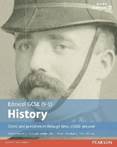
Crime and punishment through time, c1000–present |
Edexcel GCSE (9-1) History Crime and punishment through time, c1000–present Student Book Hodder GCSE (9-1) History Crime and punishment through time, c1000–present |
|
|
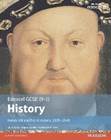
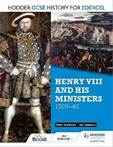
History Henry VIII and his ministers, 1509–1540 |
Edexcel GCSE (9-1) History Henry VIII and His Ministers, 1509–1540 Student Book |
|
|
History Superpower relations and the Cold War, 1941–91 |
Edexcel GCSE (9-1) History Superpower relations and the Cold War, 1941–91 Student Book Hodder GCSE (9-1) History Superpower relations and the Cold War, 1941–91 |
|
|
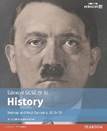
Weimar and Nazi Germany, 1918–1939 |
Edexcel GCSE (9-1) History Weimar and Nazi Germany, 1918–1939 Student Book |
|




Progression Routes
History GCSE is an invaluable subject that will broaden students’ post-16 options. Students who achieve a grade 6 or higher often go on to study the A Level History course offered at Greenford High School. Where students do not achieve a grade 6 or higher in GCSE history, they may still apply to Greenford High School Sixth Form to study other courses or pathways, or perhaps alternative post-16 provisions.
Curriculum intent
Curriculum Intent – what is Greenford High aiming to achieve through its History curriculum?
Our History Department is committed to fostering a curriculum that is knowledge-rich, accessible, and inclusive, ensuring that all students develop intellectual curiosity and resilience through a diverse and socially conscious approach. We aim to integrate multiple perspectives that challenge traditional narratives while promoting empathy and understanding of the past as a complex and disparate place. By encouraging critical thinking, questioning the legitimacy of sources, and honing oracy skills, we empower students to navigate the digital age with discernment through an understanding of the past and the skills of a historian. Our teaching is guided by a moral purpose to address misconceptions, shift paradigms, and cultivate a love of learning, while ensuring that every student develops the cultural capital and second-order skills necessary to engage with the wider world.
Information technology
Why Choose Information technology?
Course Description
Level: Level 2 (equivalent to GCSE)
Awarding Body: OCR - Cambridge National Certificate in Information Technologies – J836
Exam Board Specification
This qualification will teach the students what different technology could be used and how to manage data. They will also learn about the tools and techniques for use in different digital hardware and software technologies, and how these can be integrated to create digital solutions to manage and communicate data and information. Students are taught to follow a project life-cycle of initiation, planning, execution and evaluation to complete a data management task and use their skills, knowledge and understanding of technology to complete each of the stages of the project life-cycle.
Course Content
There are three units of assessment. Learners must complete all three units of assessment to achieve the qualification:
Unit R050: IT in the digital world. Exam-based and marked externally - 40% of the qualification
In this unit, students will learn the theoretical knowledge and understanding to apply design tools for applications, principles of human computer interfaces and the use of data and testing in different contexts when creating IT solutions or products.
Students will understand the uses of Internet of Everything and the application of this in everyday life, cyber-security and legislations related to the use of IT systems, and the different types of digital communications software, devices, and distribution channels.
Assessment Unit R060: Data manipulation using spreadsheets - 30% of the qualification
In this unit, students will learn the skills to be able to plan and design a spreadsheet solution to meet client requirements. They will be able to use a range of tools and techniques to create a spreadsheet solution based on their design, which they will test.
Students will be able to evaluate their solution based on the user requirements.
Assessment Unit R070: Using augmented reality to present information - 30% of the qualification
In this unit, students will learn the purpose, use and types of augmented reality (AR) in different contexts and how they are used on different digital devices. They will develop the skills to be able to design and create an AR model prototype, using a range of tools and techniques.
Students will also be able to test and review their AR model prototype.
Units R060 and R070 are PROJECT based- marked by the centre and moderated by the exam board.
This assessment is Synoptic and is a built-in feature of this qualification. It means that students need to use an appropriate selection of their knowledge, understanding and skills developed across the qualification in an integrated way and apply them to a key task or tasks.
The externally assessed unit R050 allows students to gain underpinning knowledge and understanding relevant to IT and the non-examined assessment (NEA) units R060 and R070 draw on and strengthen this learning by letting students apply their learning in a practical, skills-based way.
Progression Routes
Successful completion of this qualification will enable learners to progress onto Level 3 Cambridge Technicals or other relevant academic and/or vocational study at Post-16. The knowledge and skills gained will provide a secure foundation for a career in the Information Technology industry such as apprenticeships or degrees in the following:
- Software development
- Web design
- Cyber Security
- Networking
- IT technical support.
- Project Management
Curriculum Intent
What is Greenford High School aiming to achieve through its Computing and Information Technology curriculum?
- To build a computing curriculum that develops pupils' learning and results in the acquisition of knowledge of the digital world around them, that prepares pupils to live safely in an increasingly digital British society.
- The KS3 curriculum has been designed to ensure learners have sufficient knowledge to stay safe online and use computers safely in life.
- The KS3 curriculum also provides a focus on developing resilient learners who think in a more logical way, can recover from mistakes, and effectively solve problems.
- The rationale of the KS4 curriculum is for students to develop the mind-set of a computer scientist built upon the foundations at KS3 and to build upon at KS5.
- Students will develop their knowledge and understanding of computer technology to become independent and discerning Information Technologists, who are able to make informed decisions about its use while being aware of the implications of different technologies.
- We want students to not only understand how to use technology effectively and responsibly but also how technology is developed and constantly redeveloped into new and exciting tools.
- In teaching Cambridge Nationals in IT, we will inspire and equip pupils with the confidence to use skills that are relevant to the IT sector. It’s a vocational qualification, equivalent in value to a GCSE and contains both practical and theoretical elements.
We want students to not only understand how to use technology effectively and responsibly but also how technology is developed and constantly redeveloped into new and exciting tools.
Student Experience
Mathematics
Find out more about maths gcse
Course Description
Level: GCSE
Awarding Body: Edexcel
Exam Board Specification
At Key Stage 4, we transition students from mathematical learners into confident GCSE candidates. Our approach ensures that every student—regardless of their starting point—is challenged to reach their full potential and sees the value of Mathematics in their future careers.
Consistent Progress through Retrieval
The rigour of GCSE requires excellent long-term memory. We continue our successful KS3 strategy into KS4 to ensure students are exam-ready:
- Daily Retrieval: 10-minute silent starters to keep previous topics fresh.
- End-of-Topic Quizzes: Immediate feedback on GCSE-level concepts.
- Cumulative Half-Termly Exams: These track a student's progress across the entire GCSE specification, ensuring that topics covered in Year 10 are still mastered by the end of Year 11.
Course Content & Assessment
Students continue their spiral journey through Year 10. At the end of Year 10, we work closely with students to decide on the most appropriate Tier of Entry:
- Higher Tier: Grades 9–4
- Foundation Tier: Grades 5–1
The Edexcel GCSE consists of three equally weighted papers (90 minutes each): One non-calculator and two calculator papers. In the final terms of Year 11, students enter an intensive revision programme designed to sharpen exam technique and build the resilience needed for the summer series.
Beyond the Classroom
We prepare our students for life beyond the exam hall. When exploring topics like percentages and interest, we integrate personal finance skills. Furthermore, our KS4 students see the "next step" in action, with Post-16 mentors frequently visiting classrooms to offer peer support and guidance.
Media Studies
Why choose Media Studies GCSE?
Course Description
Level: GCSE
Awarding Body: AQA
Exam Board Specification
The media is a hugely important influence in society: we all interact with TV, news, the internet, movies or games on a daily basis. Media Studies at GCSE offers students the tools to deconstruct the messages that bombard us and help us make sense of the world we live in.
Media Studies also provides students with genuine skills they can take into the workplace: project management, team working, creative design and communication. Production work requires discipline, commitment and creativity – attributes that every employer will value.
Course Content
GCSE Media Studies covers the following topics:
- Media Language, Genre and Narrative structures/theories: how to analyse media texts
- Media Industries: the companies and decision makers that produce and regulate media texts
- Media Audiences: profiling, targeting and audience theory
- Media Representations: analysing stereotypes of people, places and groups
- The social, historical and cultural contexts: the importance of media texts and how they have changed over time
- How to use industry standard software such as Adobe Photoshop and Premiere Pro
- How to produce media texts with a professional finish
Assessment
GCSE Media Studies is assessed as follows:
Controlled Assessment (coursework) is 30% of the final grade. All production work is completed in school (research and preparatory work may be completed at home). One assignment – released by the exam board at the end of the first year of the course and completed during the second year. Students need to produce:
- A statement of intent
- A media product for an intended audience
Two end-of-course exams make up the rest of the GCSE grade. The exams are:
Media One
90 minute written exam worth 35% of the GCSE. All four key concepts (Language, Representation, Industries, Audience) are tested using unseen material and a range of short and extended response questions on the Close-Study Products.
Media Two
90 minute written exam worth 35% of the GCSE. Section A is based on a screening from one of the Television Close-Study Products students will have studied during the course. Section B focuses on newspapers, online media or videogames.
Close-Study Products
The course is taught through 18 close-study products specified by the exam board. These are media texts from nine different types of media (e.g. TV, newspapers, music video) and spanning a wide variety of time periods, audiences and contexts.
Resources
All of our work in Media is done online using blogs - this means you can access all the notes and tasks from anywhere to help keep on top of the work. Have a look at our GCSE Media blogs to find out more about the type of work we do in Media:
There is also a textbook and revision guide available for the AQA GCSE Media course from Illuminate Publishing but this is an optional extra. We will cover everything students need to study through lessons and the blog.
Progression Routes
A GCSE in Media Studies will lead naturally to A Level Media Studies and other arts-based A Levels such as English Literature, Sociology or other humanities subjects.
Curriculum intent
What is Greenford High School trying to achieve through our Media curriculum?
- An understanding and appreciation of how media products communicate meanings to audiences.
- Confidence in understanding and applying media language and theory in analysing media products.
- An awareness of the changing nature of media audiences, how they are targeted by producers and why they use or enjoy particular media products.
- An understanding of issues of representation in the media, with particular focus on how the representation of certain groups is changing in the digital age.
- Knowledge and understanding of media industries: conglomerate ownership, public service broadcasting and how the media is regulated.
- The social, cultural and historical contexts of media products and platforms, including an awareness and appreciation of how the media reflects our increasingly diverse society.
- An exposure to media products and platforms that students may not otherwise experience such as historical texts or foreign-language media.
- An appreciation of the impact of new and digital media on the creation and consumption of media products and wider society.
- A critical perspective on media debates such as the effect media has on audiences or the changing relationship between audiences and producers.
- A range of technical and creative production skills on video and print platforms using industry standard software.
- The ability to project-manage, act on feedback and develop production work that approaches professional standards.
- Knowledge of the wide variety of careers in the creative and media industries.
- We want our students to be independent, creative and analytical – a rare but incredibly powerful combination of skills.
Student Experience
Music
Why Choose Music GCSE?
Course Description
Level: Level 2 (equivalent to GCSE) Technical Award in Music Technology
Awarding Body: NCFE
Exam Board Specification
Entry Requirements: Being an instrumentalist or a vocalist is desirable but not essential. The skills and knowledge that are developed over KS3 provide a suitable platform for progression. You must be willing to develop your musicality through extra-curricular involvement and independent practice of necessary skills. We recommend that students should have achieved at least a 2+ at KS3 or been recommended by their music teacher.
The NCFE Level 2 Technical Award in Music Technology enables learners to develop skills, knowledge and understanding of the music and music technology industry. It is suitable for learners who are motivated and challenged by learning through hands-on experiences. The qualification will allow learners to gain practical skills in creating music using technology.
Course Content
The qualification provides an introduction to the music and music technology industry and enables learners to acquire, develop and apply skills and knowledge required for further academic and/or vocational study.
This qualification shows learners how to:
- set up and use a Digital Audio Workstation (DAW)
- create a musical project to a specified brief, using audio and MIDI editing tools
- understand and experiment with musical elements in a chosen style
- plan and undertake a studio recording session
- use mixing techniques to make a multi-track recording
- explore sound creation.
Assessment
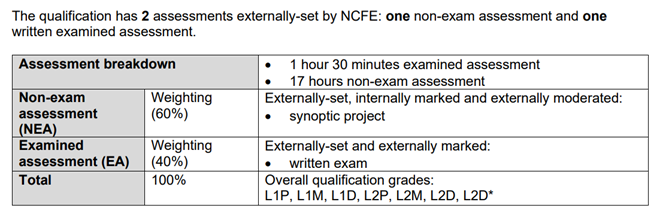
To be awarded this qualification, learners are required to successfully demonstrate the knowledge and skills to meet the requirements of all 5 content areas of this qualification.
Content areas

Progression Routes
Successful completion of this qualification will enable learners to progress onto NCFE Level 3 Applied General Certificate in Music Technology or other relevant academic and/or vocational study at post-16. The knowledge and skills gained will provide a secure foundation for a career in the music technology industry.
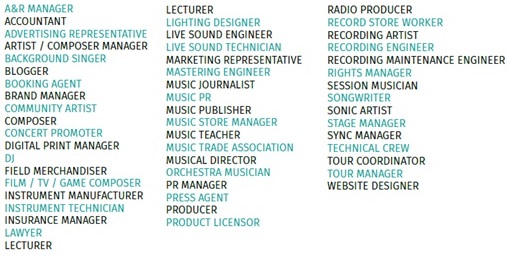
Knowledge of the music technology industry can lead to varied career paths when combined with other courses. Some examples are given below:
Curriculum Intent
What is Greenford High School aiming to achieve through its Music curriculum?
- To expose students to the three fundamental skills of performing, composing and analysing music through a variety of activities.
- To promote excellence and encourage students to create outstanding work. These opportunities may come through the curriculum which aims to create career based work scenarios; through our extra-curricular programme, which gives students opportunities to further develop musicality and offers ample performance opportunities; and through workshops and trips held throughout the academic year.
- To instil good practice and routines in order to maintain discipline and create a safe working environment where students can express themselves musically whilst feeling supported by their teachers and peers.
- To ensure a culture of inclusivity is maintained at all times and nurture students to become more emotionally developed and empathetic towards other people and cultures.
- To develop students to learn to think creatively and be adept at problem solving. Students will learn how to work together and build stronger relationships. Performing can bring fear and anxiety, but students learn to cope with these situations through self-reflection, which will help them become more confident.
- To expand student’s perspectives through a range of spiritual, moral, social; and cultural opportunities. Students will learn about the cultural significance and impact of music and how it connects people.
- To explore the links between music, numeracy and literacy. Musical training helps develop areas of the brain related to language and memory, and reasoning becomes more developed.
- To prepare students for the next stage of their education, future pathways and careers through developing the skills and attributes required for success both at school and in the workplace.
Student Experience
Photography
Why Choose Photography GCSE?
Course Description
Level: GCSE
Awarding Body: Edexcel
Exam Board Specification
Entry Requirements: To be successful in GCSE Photography we recommend that students have achieved at least a grade 4 in Key Stage 3 Art and English or are recommended by their art teacher.
At GHS, the Art & Photography Department is strongly committed to offering an innovative approach to making art through projects that involve both traditional and experimental exploration of materials and concepts. The challenge set by the Photography course requires the students to develop key artistic skills such as creativity, imagination, problem solving, critical thinking, cultural awareness, communication and knowledge - all skills that are useful in both employment and continued study at A Level. Photography is an excellent option that provides balance with the core subjects.
Some of the skills taught are:
- Photoshop
- Studio Photography
- Genre Photography
- Composition theory
- Lighting effects
Course Content
The GCSE Photography course is divided into two key components over two years: component 1 and an externally set exam = component 2.
We aim to give students a wide range of experiences and opportunities, and are keen to encourage the development of strong personal qualities in each student's artwork and chosen media. Before embarking on their assessable coursework, students begin the first year by completing a short ‘Intro to Photography’ course which develops their handling of a wide variety of materials, encourages experimentalism, builds technical skill and confidence. These projects serve to equip them with a basic ‘toolbox’ of skills which can be developed and refined in subsequent coursework.
Within GCSE Photography (component 1 - 60% of the final grade, component 2 exam 40% of the final grade) students will:
- Produce a digital portfolio on Google Docs.
- Explore ideas & concepts behind photographers’ work.
- Visit galleries and exhibitions, enabling students to learn from the work of others and making connections with their own work and past/contemporary practices.
- To show progress through a variety of outcomes and supporting studies.
In order to fulfil the demands of the course, students are required to come in after school to complete coursework at least once a week in their second year of the course. Students will be given full support both in and out of set lesson time.
Progression Routes
Achieving grade 5+ in GCSE Photography means you are equipped to take A Level Photography or Fine Art, which is a very comprehensive course that has many pathways for study at University and Art College to lead you in a career such as:
- Art Director
- Press Photographer
- Photo Retoucher
- Photo Editor
- Fine Art Photographer
- Photojournalist
- Cinematographer
- Medical artist
- Artist
- Animator
- Film
- Set Designer
- Architect
- Publishing
- Graphic Artist
The critical, analytical and creative skills that students acquire in a GCSE and A Level Photography course give students the broad background that the majority of creative courses require in further education. Always research courses that you are potentially going to study at high school to ensure that you choose the right GCSE and A Level to suit your future education.
Curriculum Intent
What is Greenford High School aiming to achieve through its Photography curriculum?
- To enable students to develop an understanding and awareness of the world around them by questioning their surroundings, looking deeply and opening their eyes to fresh perspectives
- To develop an awareness of health and safety within an art studio environment and to take responsibility for managing the materials they use
- To be creative and develop their ability to problem solve, think academically, emotionally, physically and spiritually. They will learn to adopt resilience and focus in applying their technical skills to projects that develop their self-expression
- To respond imaginatively to artist and thematic research and use knowledge of photographers and cultures to inspire their work. Students develop an understanding of the historical and cultural development of forms and are taught to evaluate and analyse works using subject-specific vocabulary
- To plan and develop meaningful responses for their work that realises intentions and demonstrates an understanding of visual language
- To display creative expression which leads to improved well-being, and support their study experience.
Physical Education
Why Choose PE GCSE?
Course Content
Level: GCSE
Awarding Body: AQA
Exam Board Specification
Course Breakdown
- 60% Theory
- 30% Practical - 3 sports are assessed.
- 10% Analysis of performance
Theory
Two written exams; content split into following topics:
- Applied anatomy and physiology
- Movement analysis
- Physical training
- Health, fitness and well-being
- Sport psychology
- Socio-cultural influences
- Use of data
Practical
The assessment consists of students completing three physical activities from a set list. One must be a team activity. One must be an individual activity. The final activity can be a free choice
Half-term assessments
Students will be graded on their practical, theory and homework within every half term.
Resources
The following resources are provided for students:
- Textbooks that can be used at school and borrowed to take home
- Subject folders and files to store all their hand outs, assessments and homework
- Online learning platform used is The Everlearner.
Progression routes
Post 16
- A level PE.
- A levels: some of the Science courses are complemented by GCSE PE (Chemistry/ Biology ), Social Sciences (Sociology) and Psychology.
- Vocational courses: BTEC Sport (Available at GHS) or Sports Coaching or even practical courses.
Post 18 and careers
GCSE PE can lead to a wide range of employment routes and careers.
- University: courses such as PE teaching, Sports journalist, Nutritionist, Physiotherapist, Sports Medicine, Sports Development.
- Work/apprenticeships: Teaching assistant, Personal Trainer, Fitness coach, Sports coach.
Curriculum Intent
What is Greenford High School aiming to achieve through its Physical Education curriculum?
- To develop a passion for sport and physical activity for students to continue throughout their school life and beyond.
- To develop self-esteem for our students to allow them to feel confident with challenging tasks in PE and across other curriculum areas.
- To offer an extensive range of activities that develops a wider understanding of the sporting world.
- To participate in activities that develop different fitness components, such as cardiovascular fitness, flexibility and muscular strength & endurance.
- To develop teamwork and leadership skills through challenging competitive and co-operative activities.
- To promote the values of good sportsmanship across different sports with respect being a common theme.
- To encourage students to develop a healthy lifestyle and have a basic understanding of health awareness.
- To develop independence through physical challenges, evaluating, problem solving challenges, consolidating skills and practice through repetition.
- To promote resilience amongst our students through challenging physical and mental situations.
Student Experience
Psychology
Why Choose Psychology GCSE?
Course Description
Level: GCSE
Awarding Body: Edexcel
Exam Board Specification
Psychology is the study of the mind and people's behavior. Psychology will provide you with a greater understanding of human behavior. You will have the opportunity to explore your own ideas as well as the ideas of others and gain an understanding of how psychological theory impacts everyday life.
It will spur on your creative and critical thinking skills and will prompt you to ask questions about the issues that impact on our lives. There will be some opportunities to carry out your own psychological research.
GCSE Psychology is an interesting and challenging course. You will cover the course material through a variety of activities including practical experiments, group work, discussions, and presentations.
The course involves studying a wide range of psychological areas that cover the main issues facing psychologists today.
Course Content
Paper 1: 55% of Qualification (98 Marks)
- Topic 1: Developmental Psychology
- Topic 2: Memory
- Topic 3: Social Psychology
- Topic 4: The Brain and Neuropsychology
- Topic 5: Psychological problems
Paper 2: 45% of Qualification (78 Marks)
- Topic 6: Crime
- Topic 7: Sleep and Dreaming
- Topic 8: Research Methods
Assessment
As a two-year course, all content will be assessed at the end of Year 11. Students will sit two exams.
Progression Routes
Psychology is an excellent subject choice because you will be developing a number of different skills that can be used in a wide range of subjects. These include:
- Evaluation Skills
- Communication Skills
- Debating/discussion Skills
- Researching Skills
The course material and skills you develop when studying GCSE Psychology will prepare you for the A Level Psychology course.
There are so many jobs you can go into with a psychology degree, including:
- Clinical Psychologists
- Psychiatrist
- Forensic Psychologist
- Occupational Psychologist
- Teacher
- Social Worker
- Child Psychologist
- Sport Psychologist
Curriculum Intent
What is Greenford High School aiming to achieve through its Psychology curriculum?
- To develop a passion for understanding the causes of human behaviour, psyche and motivation.
- To appreciate the relevance of psychology in all areas of life, whether it is family, colleagues or strangers, individuals or crowds that they will encounter throughout their lives.
- To develop a sense of morality and ethical practice that will influence the treatment of others and appreciate the social responsibility that can often accompany having a greater insight into human behaviour than most.
- To raise an awareness of abnormal psychology such as depression, schizophrenia and obsessive compulsive disorder so that students have a better understanding of their own and other people, be it friends, family members or future colleague’s experiences and respond with empathy and understanding.
- To build on previous learning in other subjects, particularly maths, English and biology.
- To develop extended writing, mathematical, critical, application and evaluation skills.
- To develop skills in independent study that will be beneficial in further education
- To encourage resilience and a growth mind-set towards studying, work deadlines and assessments.
- To identify ambitions and aspirations and encourage students to appreciate the value of psychology in realising them, whether they relate to career or further education.
- To develop a culture of confidence within the classroom that allows students to question misunderstandings, challenge knowledge, express themselves and appreciate the different viewpoints surrounding sensitive topics.
- To ensure that every student feels valued and that their contribution to the lesson and classroom environment is imported and appreciated.
Student Experience
Religious Education
Why Choose RE GCSE?
Course Description
Level: GCSE
Awarding Body: AQA
Exam Board Specification
GCSE RE allows students to broaden their knowledge about people, cultures, and faiths in the world we live in. In our wonderfully diverse society, it is incredibly important to be able to respect, tolerate and acknowledge the differences in beliefs among us. When you study RE as a GCSE, you will have the opportunity to learn about the beliefs and traditions of two world religions, as well as engage and explore relevant issues in society such as war, crime, and relationships. You will develop your skills of empathy, research, evaluation, and critical thinking. RE is a valuable GCSE option as it shows that you can consider a wide range of beliefs and opinions and are able to articulate your views both verbally and in written work. It is a good basis for studying humanities subjects at A level and beyond as well as supporting students develop their writing and oracy.
Students study the beliefs, teachings and practices of Christianity and Buddhism. Students also learn about modern ethical issues and how Christians, Buddhists and non-religious people respond to these issues.
Course Content
Students study the AQA Religious Studies A exam specification.
Areas of Study Include:
- Christianity: beliefs, teachings and practices
- Buddhism: beliefs, teachings and practices
- Relationships and families
- Religion and life
- Religion, peace and conflict
- Religion, crime and punishment
Assessment
Students will be examined by two papers – 1 hour 45 minutes each – both sat at the end of the course. Each paper is worth 50% of the final grade.
Progression routes
Students can go on to study Philosophy, Ethics and Religion at A Level.
Curriculum intent
What is Greenford High School aiming to achieve through its RE curriculum?
- To provide a curriculum that allows students to have a greater awareness of religion, and moral and ethical issues and to make informed decisions in their lives.
- To develop responsible students who have the knowledge and skills to be confident reasoners with the aim of being successful in the classroom and throughout their education.
- To offer a broad range of cultural activities and opportunities to think critically, that not only meet the learning needs of all students but also allow them to thrive in their academic achievement and ensure progress to Higher Education.
- To deliver a curriculum that provides students with the essential skills of literacy and numeracy in order to be successful in all subject areas.
- To provide students with the opportunity to make thoughtful and positive contributions in society through developing their spiritual, moral, social and cultural awareness.
- To encourage students to develop a healthy lifestyle both physically, mentally and spiritually, which allows them to be ready to learn and achieve.
- To promote the skills of resilience, reasoning and self-reliance in order for students to develop a positive mindset to be able to live a safe and fulfilling life.
- To prepare students for the next stage of their education and future pathways by providing students with the knowledge and opportunities for them to be independent and aspirant individuals.
Student Experience
Science
Science gcse options
course Description
Level: GCSE
Awarding Body: AQA
Biology Exam Board Specification
Chemistry Exam Board Specification
Physics Exam Board Specification
Combined Science Exam Board Specification
All students sit a GCSE Science qualification.
Students study for either:
- Combined Science (a double award GCSE)
or
- Separate GCSEs in each of Biology, Chemistry and Physics (3 separate GCSE grades).
Entry Requirements: To be successful in GCSE Triple Science, students need to demonstrate a solid foundation in Science. As a guide, students should be achieving a grade 5 to be considered for this option, but specific criteria – including performance required throughout Y9 – is published annually.
Course Content
The Triple and Combined Science courses cover the following:
- Biology: Cell biology, organisation (hierarchy of structure and organ systems), infection and response, bioenergetics (respiration and photosynthesis), homeostasis and response (including the nervous and endocrine systems), inheritance, variation and evolution, ecology.
- Chemistry: Atomic structure and the periodic table, bonding, structure and the properties of matter, quantitative chemistry, chemical changes, energy changes, the rate and extent of chemical change, organic chemistry, chemical analysis, chemistry of the atmosphere, using resources, key ideas.
- Physics: Energy, electricity, particle model of matter, atomic structure, forces, waves, magnetism and electromagnetism, key ideas.
Triple Scientists study these topics in more depth. They also study 2 extra topics. A 'key ideas' topic extra in Biology, and a Space Physics topic in Physics.
COURSE ASSESSMENT
Both GCSE Science options are two-year courses. There are six exams, taken at the end of the second year:
Combined Science:
Each exam is 1h15 minutes long
- Before May half term in Y11, students will sit three Paper 1 exams (Biology, Chemistry and Physics)
- After May half term in Y11, students will sit three more exams. These will be Paper 2 in each subject.
Triple Science:
Each exam is 1h45 minutes long. This reflects the higher level of content and demand of the questions.
- Papers are sat at the same time as Combined. (Three before half term and three after)
RESOURCES
The following resources are essential for our course:
- CGP revision guide
- CGP workbook
Combined and Triple students require different books. These will be offered to families through Parent Pay at the start of Y10, but can be purchased independently if you would prefer.
Progression Routes
GCSE Science is important for future career choices. As one of the most respected subjects, the standard that everyone is aiming for is two good GCSEs in Science.
Progress on to A level sciences, or medicine at university, or any further study, is not restricted by whether a student takes combined science or the separate science GCSEs. It is getting the best grades that counts. For example, a 9-9 on combined is more desirable than 3 grade 6s on Triple.
However, some of the top universities and courses such as medicine do favour Triple science. High grades on Triple science will help a student to stand out from other applicants, who may only have studied Combined science.
Curriculum
What is Greenford High aiming to achieve through its Science curriculum?
At Greenford High School the Science curriculum is designed to foster a curiosity about the world around us, enable citizens of the future to understand and explore the world effectively and to be able to use scientific principles to both answer and ask questions about the universe and everything in it.
Our intent is that our curriculum:
- Inspires a love of learning and curiosity about the world
- Ensures students understand the second greatest advance in the history of humanity – the scientific method – and can apply this process to questions they might ask
- Fosters a sense of awe in the beauty of our universe and how we can work together (or individually) to deepen our understanding of ANYTHING
- Informs knowledge of the key workings of the human body so that educated opinions and decisions can be made about health, products and stories in the media
- Informs students of issues facing themselves and the wider world to help this future generation look after themselves and their planet
- Combines basic Maths and English skills in context to help students develop their application skills
- Develops the practical knowledge and skills to use scientific equipment safely and accurately to competently test ideas and demonstrate phenomena
- Develops students learning skills and independence so they can go on to be life-long learners
- Develops analytical skills to scrutinise data presented in any format to draw out meaning
- Improves transferable skills such as time-keeping, teamwork and organisation and delivers opportunities to apply the skills learnt in the form of a wide range of practicals
- Helps students develop logical thinking and problem solving skills
- Makes students more employable so they become a self-sufficient and productive member of society
- Ensures students leave GHS able to critically analyse and evaluate data, stories and phenomena in everyday situations
Student Experience
Spanish
Why Choose Spanish GCSE?
' style="width: 200px; height: 150px;">
You have not allowed cookies and this content may contain cookies.
If you would like to view this content please
Course Description
Level: GCSE
Awarding Body: EDEXCEL
Exam Board Specification
Pupils studying GCSE Spanish will have the opportunity to express their ideas and opinions on a variety of topics, learning to describe past experiences and explain future plans. In addition to learning to communicate effectively in Spanish, students will develop their cultural awareness about the Spanish-speaking world.
Course Content
EDEXCEL GCSE Spanish comprises 4 units worth 25% each. All assessments are by examination at the end of the course:
- Unit 1: Listening
- Unit 2: Speaking
- Unit 3: Reading
- Unit 4: Writing
Students study all of the following six themes on which the assessments are based.
- My personal world
- Lifestyle and wellbeing
- My neighbourhood
- Media and technology
- Studying and my future
- Travel and tourism
Progression Routes
Spanish is an excellent subject choice because you will be developing a number of different skills that can be used in a wide range of subjects. These include:
- Communication Skills
- Comprehension Skills
- Problem solving Skills
A GCSE in Spanish is very desirable as an entry requirement for many university courses and can also lead to opportunities to live and work abroad. There are opportunities to continue studying Languages alongside many other subjects at degree, e.g. Law with Spanish, European Studies (History with Spanish) and many more.
There are so many jobs you can go into with a Spanish degree, including:
- Translator
- Political Risk Analyst
- Interpreter
- Diplomat
- Lawyer
- Teacher
- International Aid/ Development worker
- Broadcast journalist
- Marketing Executive
- Transport and Logistics
- Espionage
Curriculum Intent
What is Greenford High School aiming to achieve through its Spanish curriculum?
- To develop understanding of spoken and written language from a variety of authentic sources. (listening / reading)
- To increase opportunities for spontaneous speech in order to build confidence, fluency and spontaneity when communicating. (speaking)
- To produce written responses at varying length, for different purposes and audiences, using a variety of grammatical structures. (writing)
- To make use of appropriate social conventions, including informal and formal address and register. (register)
- To foster curiosity, develop awareness and understanding of the culture and identity of the countries or communities where the language is spoken. (intercultural)
- To foster links with other curriculum areas to deepen learning and encourage bilingualism. (cross-curricular)
- To develop resilient and independent learners in order to maximise their progress and prepare them for the next stage in their education irrespective of their attainment and background. (further education)
- To provide enrichment opportunities to foster responsible global citizens who would positively contribute to society. (enrichment)
- To encourage a creative approach to language learning and instill students with a growth mindset. (creativity)